
Trump, Zelenskyy, and European Leaders Meet in Washington to Seek Ukraine Peace Path
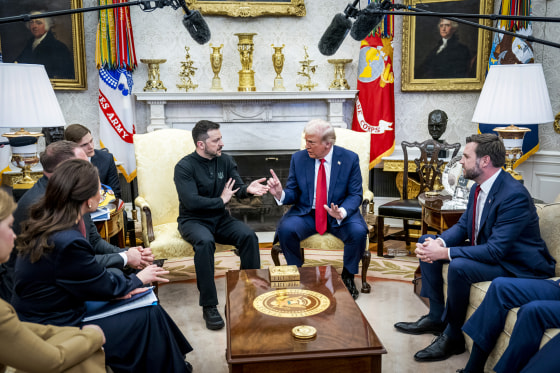
Washington, D.C. — In an unprecedented gathering that underscores the global urgency of the war in Ukraine, President Donald Trump today welcomes Ukrainian President Volodymyr Zelenskyy, along with a contingent of Europe’s top leaders, for pivotal talks at the White House. The summit, scheduled for 1:15 p.m. ET, comes mere days after Trump’s contentious meeting with Russian President Vladimir Putin in Alaska, which ended without a breakthrough on a ceasefire.
A Crossroads for Diplomacy and Conflict
The Washington meeting sees Trump convening with European Commission President Ursula von der Leyen, NATO Secretary-General Mark Rutte, U.K. Prime Minister Keir Starmer, German Chancellor Friedrich Merz, French President Emmanuel Macron, and Italian Prime Minister Giorgia Meloni. The diverse coalition of Western leaders underscores the stakes for European security — and the pressure on the United States to broker a resolution that could halt one of the most devastating conflicts on the continent since World War II.
Background: A War With No End in Sight
Now entering its fourth year, the Russian-Ukrainian conflict has claimed tens of thousands of lives, displaced millions, and sent shock waves through global energy and food markets. While Ukraine’s military has managed to reclaim some territory, the frontline remains largely frozen. Russia continues to hold Crimea — annexed in 2014 — and much of Ukraine’s east. Repeated attempts at ceasefires and diplomatic resolutions have failed, with neither side prepared to make major concessions.
U.S. and European military support for Ukraine remains robust, yet public and political fatigue is growing. The Biden administration, prior to the 2024 presidential transition, led NATO in sending billions in aid and advanced weaponry to Kyiv. However, Trump’s return to the White House in 2025 has marked a dramatic shift in American posture both toward NATO and the ongoing war. Trump has previously signaled skepticism about open-ended security guarantees and further arms packages, calling for European nations to “shoulder more responsibility.”
Trump’s Approach: Transactional Diplomacy and Controversial Proposals
Trump has repeatedly asserted he could end the conflict “immediately” if Ukrainian leadership were willing to consider territorial compromises. On the eve of the summit, he wrote on Truth Social that “President Zelenskyy of Ukraine can end the war with Russia almost immediately, if he wants to, or he can continue to fight.” Trump’s post cited the need for Ukraine to relinquish Crimea — which Russia seized under the Obama administration — and dismissed Ukrainian requests to join NATO. “NO GOING INTO NATO BY UKRAINE,” Trump posted. “Some things never change!”
Such statements have alarmed both Kyiv and Washington’s traditional European allies. President Zelenskyy has consistently refused talks that would cede Ukrainian territory, including Crimea, to Russia. In a recent social media post, Zelenskyy reiterated, “Of course, Crimea should not have been given up then, just as Ukrainians did not give up Kyiv, Odesa, or Kharkiv after 2022. Ukrainians are fighting for their land, for their independence.”
NATO and EU leaders remain steadfast in supporting Ukraine’s sovereignty, warning that rewarding Russian aggression would destabilize the rules-based European order. Nonetheless, the presence of so many senior Western officials at today’s talks signals a willingness to explore all avenues for de-escalation, provided Ukraine’s core interests are protected.
Putin’s Calculus and U.S.-Russia Dynamics
Russian President Vladimir Putin’s absence from today’s discussions is notable. Following his summit with Trump in Alaska, Putin declared the talks “constructive” but refused to announce any ceasefire or security agreement. Analysts suggest Moscow remains confident that military pressure, combined with Western political divisions, will eventually force Kyiv or its backers to accept Russia’s terms — namely, Ukrainian neutrality and recognition of Russian control over annexed regions. Meanwhile, the Kremlin has continued air and missile strikes targeting Ukrainian infrastructure, seeking to test the durability of Western resolve.
U.S. Secretary of State Marco Rubio, speaking Sunday, left the door open to a possible ceasefire but emphasized that ultimate decisions rest with the Ukrainian government. “Any agreement must reflect Ukraine’s sovereignty and security,” Rubio said on NBC’s “Meet the Press.”
European Stakes and Security Guarantees
For Europe, the conflict is existential. Beyond the humanitarian toll, the war has spurred a renewed commitment to collective defense among NATO allies. German Chancellor Friedrich Merz and French President Emmanuel Macron have both called for a “lasting and just peace” that ensures Ukraine’s independence, even as disagreements persist over the scope and nature of future security guarantees.
With Ukraine’s NATO accession stalled, Western officials have proposed a series of alternative security assurances. U.S. special envoy Steve Witkoff on Sunday suggested new bilateral pacts between Kyiv and allied capitals, mirroring the alliance’s collective defense clauses but without formal membership. “It’s about credible deterrence,” one NATO official said, “even if the U.S. president isn’t fully committed to the old model.”
European Union economic support for Ukraine also remains vital, with proposed aid packages aimed at shoring up Ukraine’s collapsing economy and reconstructing devastated regions.
Public and Political Challenges
Polls in both the U.S. and Europe show declining enthusiasm for a long, costly conflict. Trump, seeking to distinguish his foreign policy from that of his predecessors, has made appeals to voter skepticism about endless wars and promised to prioritize U.S. interests. The Biden administration’s broad public support for Ukraine had begun to erode by mid-2024 as economic concerns and calls for diplomacy grew louder among Americans and Europeans alike.
In Ukraine, support for President Zelenskyy remains strong, but trust in Western support is being tested by shifting U.S. political winds. Ukrainian officials have warned repeatedly that premature compromise or withdrawal of Western backing could be disastrous, leading to further Russian advances.
What to Watch Next
Today’s summit marks a potential turning point in the war’s trajectory. While dramatic diplomatic breakthroughs appear unlikely in one day of talks, the face-to-face meeting of Trump, Zelenskyy, and Europe’s leading statesmen is expected to clarify red lines, set the parameters for possible future negotiations, and signal the West’s enduring commitment to Ukraine — or its readiness to push for a new status quo.
Any agreement reached will be closely scrutinized by global markets, U.S. lawmakers, and capitals from Brussels to Beijing, all watching for signs of lasting peace or escalating confrontation. As diplomats gather behind closed doors in Washington, the fate of Ukraine — and the future of the postwar European security order — hangs in the balance.


