
Trump’s Executive Order to Block ‘Woke’ AI in Government Sparks Debate and Industry Uncertainty
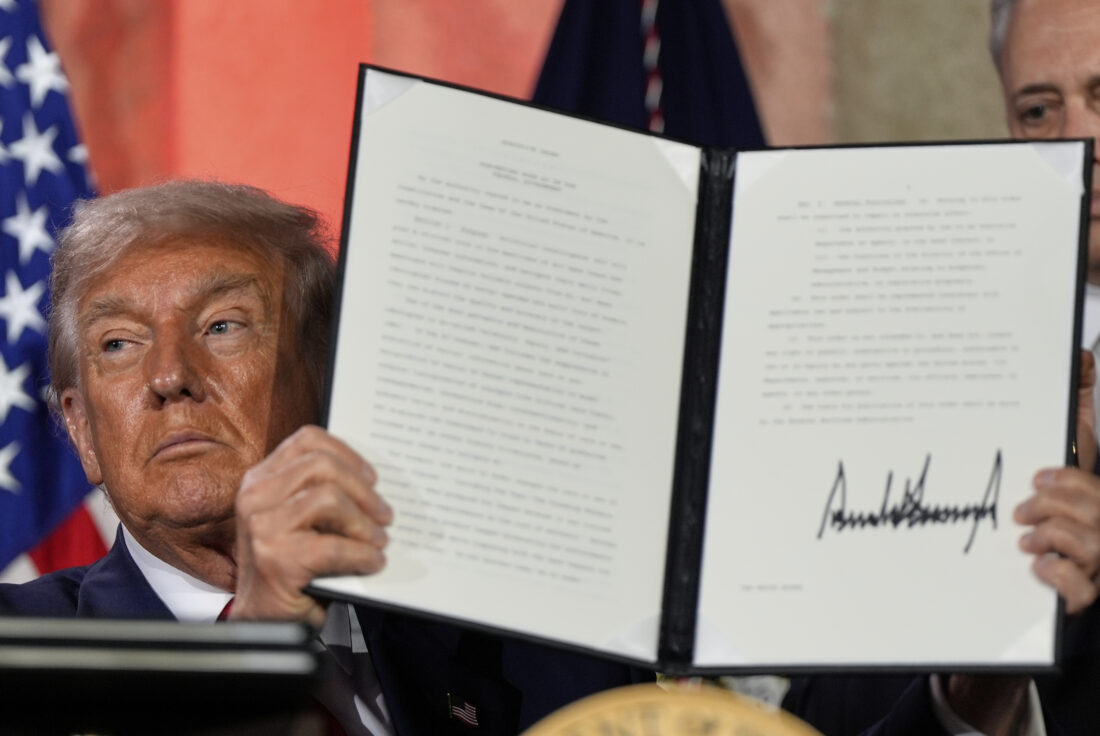
Washington, D.C. – In a move set to reshape the government’s approach to artificial intelligence, President Donald Trump has signed an executive order instructing federal agencies to avoid adopting “woke” AI technologies. The order, which is part of a trio of directives aimed at solidifying U.S. dominance in AI and countering Chinese influence, has sparked immediate debate throughout the tech industry, policy circles, and civil rights organizations.
An Ideological Litmus Test for AI
The order, titled “Preventing Woke AI in the Federal Government,” lays out new requirements for companies seeking federal contracts. These companies must provide assurances that their AI platforms do not encode or prioritize what the administration calls “destructive ideologies”—a term covering diversity, equity, and inclusion (DEI) initiatives and concepts like critical race theory, unconscious bias, and intersectionality.
The Trump administration argues that such ideologies have permeated AI systems, citing instances like last year’s controversial rollout of Google’s image generator, which produced historically inaccurate representations in response to race-related prompts. Critics within technology think tanks and Silicon Valley point to these examples as evidence of overcorrection and political bias in AI outputs.
Tech Companies Caught in the Crossfire
Leading AI providers—including Microsoft, Google, Meta, Anthropic, OpenAI, and Elon Musk’s xAI—have responded cautiously to the order. OpenAI stated that its efforts to maintain ChatGPT’s objectivity already align with the directive, while Microsoft and Google declined public comment. A spokesperson for xAI called the order a “positive step,” hinting at the high stakes for companies supplying generative AI platforms to federal agencies.
With over 270 AI use cases identified within the U.S. Department of Health and Human Services alone (as of a 2024 inventory), the order stands to significantly impact how agency staff interact with AI tools, most of which originate from the same major technology firms now facing heightened scrutiny.
Comparisons to China and Global AI Policy
Some critics contend that the order mimics China’s top-down approach to AI governance, where the Cyberspace Administration of China rigorously audits and pre-approves all AI models to ensure compliance with Communist Party values. However, the Trump administration’s order takes a less direct path: Instead of instructing companies to censor specific content, it requires them to publicly disclose the methods by which they guide or moderate their AI systems to ensure ideological neutrality.
“The Trump administration is taking a softer but still coercive route by using federal contracts as leverage,” explained James Secreto, a former senior Commerce Department official involved in AI policymaking under President Biden. “That creates strong pressure for companies to self-censor in order to stay in the government’s good graces and keep the money flowing.”
Supporters of the order argue that such transparency is overdue, accusing big tech firms of quietly embedding progressive values into algorithms, while critics view the order as an unprecedented government intrusion into corporate and academic freedom of expression.
Debate Over ‘Woke’ AI: Myth or Menace?
While the phrase “woke AI” is not universally defined, the controversy rests on whether nudges toward inclusion and fairness in AI represent appropriate corrections—addressing long-standing discrimination in language and training data—or whether they stifle neutrality and objective performance. “There’s AI technology that discriminates and then there’s AI technology that actually works for all people,” said Alejandra Montoya-Boyer, a leading civil rights voice at The Leadership Conference on Civil Rights and Technology. She and others warn that rolling back DEI components could result in a resurgence of race and gender biases that have been well-documented in AI systems.
Technology policy experts are divided on the technical feasibility of achieving total ideological neutrality in systems built on vast internet datasets inherently rife with contradictions and prejudices. “Large language models reflect the data they’re trained on, including all the contradictions and biases in human language,” noted Secreto.
Industry and Workforce Implications
The executive order’s procurement-focused approach—leveraging the federal government’s estimated $90 billion annual IT budget—puts pressure on AI vendors not just to comply, but to document and expose their efforts to mitigate bias. This includes revealing internal policies, data labeling practices, and chat moderation guidelines. Some in the industry warn this could result in a chilling effect, where companies overcorrect to avoid risk, or self-censor innovation to align with political preferences, regardless of which party is in power.
Meanwhile, debates rage internally at major tech firms over how to balance DEI commitments with a shifting regulatory environment. Silicon Valley workers, from data annotators to AI engineers, face new uncertainties about how their day-to-day design choices might come under federal review or become fodder for political controversy.
Political Influence and the Road Ahead
The fingerprints of influential conservative strategists—including tech investors and activists like Marc Andreessen and Chris Rufo—are evident in the order’s framing and execution. Many had voiced dismay over real and perceived DEI-driven “overrides” in AI products. These voices now claim a policy victory, with the administration openly crediting their input on how to define and root out “woke” algorithms. “When they asked me how to define ‘woke,’ I said there’s only one person to call: Chris Rufo,” investor David Sacks stated on social media after the order’s rollout.
Despite the dramatic rhetoric, some legal scholars and former government regulators like Neil Chilson, head of AI policy at the Abundance Institute, point out that the order may ultimately prove relatively light-touch. “It doesn’t even prohibit an ideological agenda—just that any intentional methods to guide the model be disclosed,” Chilson said, noting the contrast with China’s more direct censorship demands.
What’s Next for Tech, Government, and Public Trust?
For now, much hinges on how federal agencies will implement the order, and whether the required study period leads to clear, actionable rules for procurement. Industry experts worry about the operational burden of documenting every “value guardrail” encoded within hundreds of AI systems across both public and private sectors.
The executive order’s long-term impact will depend not just on compliance, but on courts, public feedback, and possible responses from a globally competitive tech industry. As governments worldwide grapple with AI’s role in society, the U.S. is positioning itself at the intersection of technological ambition, transparency, and deepening cultural divides.
Ultimately, the order represents a pivotal moment in the conversation about artificial intelligence, its governance, and the values the U.S. seeks to embed—or exclude—in its digital future.


