
White House Prepares for Mass Federal Layoffs Amid Looming Government Shutdown
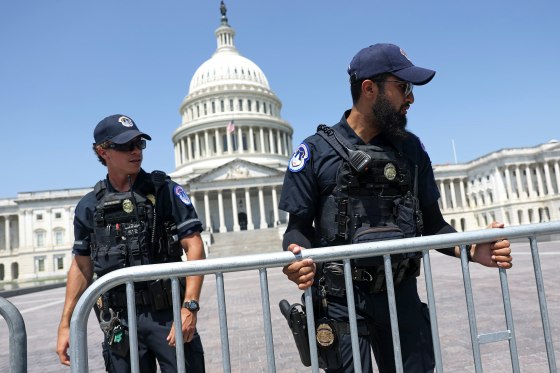
Officers work near the Capitol on June 23. © Joe Raedle / Getty Images file
Government Shutdown Threat Intensifies With Potential for Mass Layoffs
As the deadline to secure federal funding rapidly approaches, the U.S. government faces one of the most severe shutdown threats in recent years. On September 24, the White House circulated a directive from the Office of Management and Budget (OMB) instructing all federal agencies to prepare “reduction in force” (RIF) plans. Unlike prior shutdowns, where most employees were temporarily furloughed, this guidance raises the specter of permanent job loss for potentially thousands of federal workers if funding lapses on October 1 and no alternate solution is found.
Traditionally, government shutdowns result in furloughs—temporary unpaid leaves—for employees not deemed “essential.” However, the OMB memo made clear that this time, for any federal programs whose funding ends and cannot be replenished, layoffs are on the table. “RIF notices will be in addition to any furlough notices provided due to the lapse in appropriation,” the memo states, marking a sharp departure from previous practices.
Stalemate in Congress Heightens Stakes
This dramatic escalation comes as Congress remains deeply gridlocked. With the current fiscal year ending at midnight on September 30, lawmakers have yet to agree on appropriations bills that would fund federal operations. The Republican-controlled House recently passed a stopgap measure to temporarily extend funding until November 21, but the Senate has rejected both Republican and Democratic proposals amid sharp partisan divides on spending levels and policy priorities.
The uncertainty is already causing ripple effects across federal agencies, with many preparing shutdown contingency plans. During the 2018–2019 government shutdown—the longest in U.S. history—some 800,000 federal employees were furloughed or required to work without pay, straining public confidence in government and impacting numerous public services. Economic analysis by the Congressional Budget Office found that the shutdown cost the U.S. economy an estimated $11 billion, with about $3 billion considered permanently lost.
This time, plans for actual layoffs, rather than temporary furloughs, could have even more significant and lasting consequences. The OMB’s firm stance signals the administration’s willingness to use employment as a bargaining tool, putting pressure on Congress—particularly Senate Democrats—to reach a compromise before the funding deadline.
Political Reactions: Accusations and Hardline Rhetoric
The prospect of mass layoffs provoked strong reactions from both parties. Senate Minority Leader Chuck Schumer (D-N.Y.) condemned the move as an intimidation tactic: “Donald Trump has been firing federal workers since day one—not to govern, but to scare. These unnecessary firings will either be overturned in court or the administration will end up hiring the workers back, just like they did as recently as today.”
House Minority Leader Hakeem Jeffries (D-N.Y.) echoed this sentiment on social media, rejecting any attempt by the administration to use federal jobs as leverage, calling out OMB Director Russell Vought directly. “We will not be intimidated by your threat to engage in mass firings. Get lost,” he wrote on X (formerly Twitter).
Democrats argue that the potential firings are being weaponized to force votes on Republican budget priorities, while Republicans maintain it is a necessary step to uphold fiscal discipline and align federal spending with the administration’s agenda.
President Donald Trump escalated tensions further by canceling a scheduled meeting with top congressional Democrats intended to broker a last-minute deal. In response, Schumer commented: “Trump and Republicans are holding America hostage. Donald Trump will own the shutdown.”
Experts Warn of Lasting Damage
Bobby Kogan, a senior director at the Center for American Progress and former OMB official, issued a stark warning about the implications of sweeping layoffs. “This would be an action of enormous self-harm inflicted on the nation, needlessly ridding the country of talent and expertise,” Kogan said. Many analysts agree, noting that a large-scale reduction in federal personnel would disrupt the delivery of essential services, from social security benefits to airport security operations.
Historically, even brief shutdowns see crippling effects across sectors. Government contractors, small businesses dependent on federal projects, and ordinary citizens who rely on timely government processes could face delays and economic hardship. The American Federation of Government Employees (AFGE), the largest union representing federal and D.C. government workers, has vowed to fight any unjustified layoffs, highlighting the risk to critical infrastructure and national security operations.
Economic and Public Service Impact
According to recent data, approximately 2.2 million people work directly for the federal government (excluding postal workers and uniformed military), supporting everything from public health programs and disaster response to border control and scientific research. Economists caution that permanent layoffs on any significant scale could have knock-on effects for local economies, consumer spending, and the broader job market, particularly in cities with large concentrations of federal employment like Washington, D.C., and surrounding Maryland and Virginia suburbs.
Public confidence in government has also historically eroded during prolonged shutdowns. In addition to missed paychecks for employees, disruptions can lead to delays in food inspections, slowdowns at airports, suspensions of national parks, and halts to key data collection and research activities.
What Happens Next?
With days left to avoid a shutdown, all eyes are on Capitol Hill. The White House’s aggressive posture may be an effort to force congressional action—but it also risks inflaming tensions at a critical juncture. As deadlines approach, federal employees and the public at large are left in a state of uncertainty, bracing for potential disruption.
Should Congress fail to approve new funding, agencies will begin issuing furlough and RIF notices in the coming week. The move would mark a drastic shift in federal workforce management, with potentially far-reaching consequences for the public sector and beyond. In the meantime, advocacy groups, unions, and watchdog organizations are mobilizing legal and political responses, seeking to protect jobs and maintain essential government functions as the crisis unfolds.
The next 72 hours could determine the trajectory of federal operations and the livelihoods of millions of Americans, underscoring the urgent need for bipartisan compromise to keep the government open and functioning.


