
Why Fears of a Trillion-Dollar AI Bubble Are Growing
The artificial intelligence (AI) revolution is charging ahead at an unprecedented pace, drawing trillions of dollars into the technology sector and transforming the global investment landscape. Yet, as AI touches new heights of economic influence and social visibility, investors and industry watchers are warning that we may be witnessing the formation of an enormous market bubble—one that could rival the infamous dot-com crash of the early 2000s.
A Surging Tide of Investment
Major technology firms, including OpenAI, Meta, Google, Microsoft, and Nvidia, have committed mind-boggling sums to AI research, advanced semiconductor purchases, and massive data center buildouts. According to market research by Bain & Co., by 2030, AI companies could require $2 trillion in annual revenue just to fund the computing power demanded by projected usage—a leap far above current levels. Bain’s analysts warn of an $800 billion shortfall, underscoring the risk that AI business models may not mature quickly enough to deliver sustainable profits in the near term.
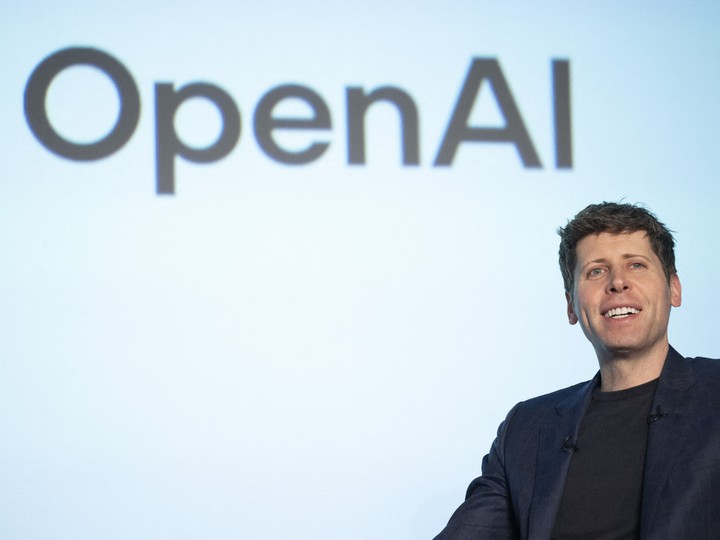
OpenAI, the creator of ChatGPT and a central force in the industry’s expansion, expects to burn through $115 billion in cash by 2029, reported by The Information. The company is embarking on unprecedented infrastructure projects such as “Stargate,” a $500 billion initiative announced at the White House. CEO Sam Altman has even forecasted overall AI infrastructure spend could reach into the trillions.
Rivals are following suit. Meta’s Mark Zuckerberg has pledged hundreds of billions for AI data centers. Nvidia, the world’s leading maker of AI accelerator chips, announced a deal to invest up to $100 billion to support OpenAI’s expansion—raising concerns about the feedback loop created as chipmakers finance their own customers.
Unconventional Funding and Sky-High Valuations
Unlike the prior tech boom, today’s AI wave sees companies tapping both traditional debt markets and unconventional funding arrangements. Meta secured $26 billion in financing for a data center complex in Louisiana—the size of Manhattan—while major banks like JPMorgan Chase and MUFG are leading multi-billion dollar loans for other global data center projects. Startups and newly spun-off firms like Nebius and Nscale have landed multi-billion dollar infrastructure deals with Microsoft and Nvidia, reminiscent of the speculative financing seen during previous tech bubbles.
The result is soaring private and public valuations. Earlier this year, OpenAI displaced SpaceX as the world’s most valuable private startup, with a notional valuation near $500 billion—despite not having posted a profit. Nvidia’s market capitalization briefly exceeded $4 trillion, establishing it as the world’s most valuable public company by September 2025. Shares in AI and tech have rebounded strongly from selloffs tied to temporary market jitters, but much of the rally is driven by investors’ forecast of future growth rather than present-day earnings.
Echoes of the Dot-Com Boom—and Some New Risks
The parallels with the 1999-2000 internet bubble are hard to ignore. During the dot-com era, speculative investment poured into telecommunications and internet firms with little revenue and questionable business models. When reality set in, markets crashed and only a handful of giants—think Amazon and Google—emerged stronger.
Today’s AI race also features splashy fundraising, lavish spending, and pressure on smaller tech companies to keep pace, regardless of current profitability. AI startups boast impressive recurring revenue, but the sustainability of such growth is yet untested. Bret Taylor, OpenAI’s chairman, sees clear echoes: “It is both true that AI will transform the economy…and we’re also in a bubble, and a lot of people will lose a lot of money.”
Yet, some crucial differences exist. The largest players (“Magnificent Seven” tech giants) have robust, diversified revenue, healthy balance sheets, and global reach. This reduces the risk of mass bankruptcies seen in the dot-com implosion, but also potentially concentrates long-term industry gains in fewer hands.
Profitability and Productivity Under Scrutiny
Commerce and research communities are increasingly skeptical about near-term returns on AI investments. An August 2025 study by MIT found that 95% of organizations saw no measurable return from recent AI projects. Separate research by Harvard and Stanford pointed to the growing problem of “workslop”—task outputs created by AI that appear useful but fail to genuinely advance productivity, costing large companies millions annually in lost efficiency.
While the promise of AI has always included radical efficiency and automation, industry insiders admit progress toward artificial general intelligence (AGI) is slowing. Altman, for example, conceded after OpenAI’s latest release in August that “we’re still missing something quite important” to truly reach AGI. Meanwhile, Chinese competitors like DeepSeek are releasing cheap, competitive models, triggering price wars and—at times—market selloffs. In January, DeepSeek’s model release precipitated a dramatic $1 trillion drop in global tech stock value in a single day, before shares subsequently rebounded.
Energy and Infrastructure Challenges
The build-out of AI data centers is driving huge increases in demand for electricity worldwide, raising significant questions about the sustainability and scalability of the sector. Growing strain on the power grid presents a potential bottleneck that could slow or limit further industry growth. Some analysts warn that the environmental and infrastructural costs of this expansion could make current revenue projections even harder to achieve.
Defending the Future—Or Fueling a Frenzy?
Despite mounting skepticism, the leaders of the industry remain bullish. Sam Altman candidly said, “Are we in a phase where investors as a whole are overexcited about AI? In my opinion, yes. Is AI the most important thing to happen in a very long time? My opinion is also yes.” Mark Zuckerberg has echoed these sentiments, saying his bigger risk is “not spending enough” rather than overspending on the AI opportunity.
Companies argue that the productivity and problem-solving capabilities AI brings are already manifest in some industries. OpenAI and Anthropic cite evidence from their corporate clients and have released research showing significant upticks in automation. OpenAI’s GDPval evaluation system highlights that, in some tasks, models are already approaching the quality of experienced professionals—a harbinger, they assert, of even greater economic impact to come.
But for all the optimism, even the biggest names—Amazon’s Jeff Bezos included—describe the moment as an “industrial bubble,” with potentially immense productivity gains but also a very real risk of capital destruction along the way.
What Happens If the Bubble Pops?
Economic bubbles are defined by rapid rises in market valuations unsustained by fundamentals, followed eventually by a correction or collapse when reality intrudes. Bubbles often begin with excitement about a new technology—AI certainly qualifies. History suggests that while some firms will fail, the sector could still deliver massive long-term value, just as the internet did after its bust.
For now, the world watches as AI rolls out on an unprecedented scale. ChatGPT and similar technologies continue to attract hundreds of millions of users weekly. OpenAI expects revenue to more than triple in 2025 to $12.7 billion. Valuations strain credulity, but so did those of the early titans of web commerce.
Whether the current frenzy ultimately results in a painful market correction or merely a winnowing of weaker competitors, investors, innovators, and policymakers alike must navigate the future of AI with both excitement and caution.


