
Federal Court Reviews Trump’s National Guard Deployment in Chicago Amid Legal and Political Tensions
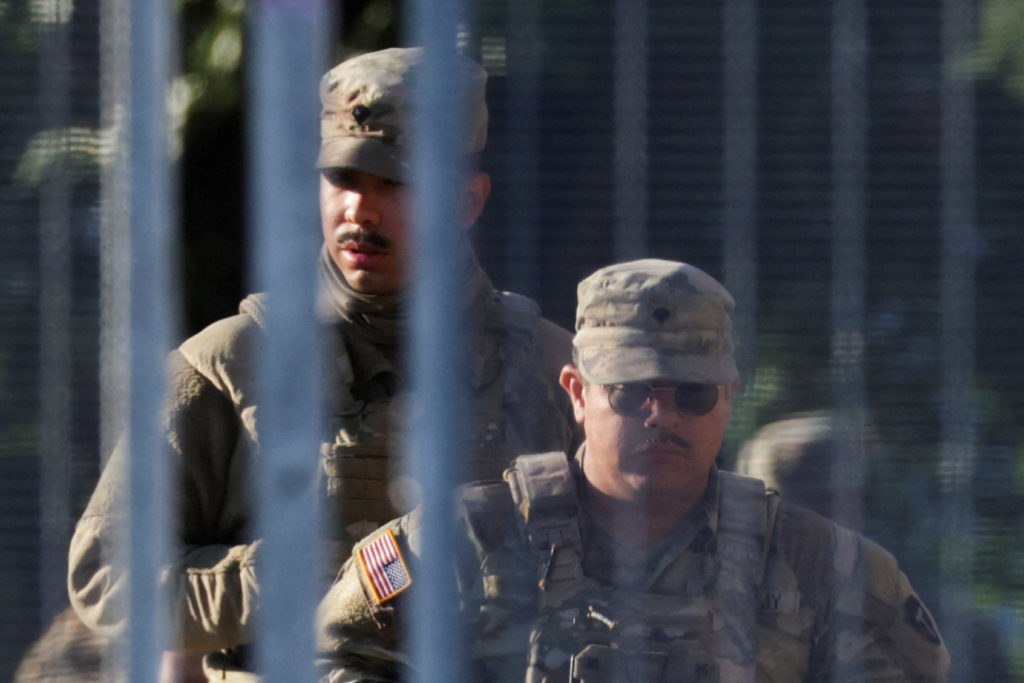
The deployment of National Guard troops to the Chicago area under the direction of President Donald Trump is undergoing rigorous judicial scrutiny, as activists and state leaders rally against what they characterize as an unprecedented federal intervention in local law enforcement matters. The legal challenge, which is being heard in federal court, spotlights the enduring debate over the scope and limits of presidential power, especially regarding domestic military deployment.
Background: Federal Troops in American Cities
On October 9, 2025, a U.S. District Court began hearings following the Trump administration’s activation of about 500 National Guard members—comprising 300 from Illinois and 200 deployed from Texas—tasked with securing U.S. Immigration and Customs Enforcement (ICE) buildings and federal properties in the region. According to the U.S. Northern Command, the troops were mobilized for a two-month operational period in and around Chicago, with a stated mission of protecting federal law enforcement assets in response to ongoing protests and security concerns.
This move was met with immediate legal resistance. Illinois Governor JB Pritzker, a Democrat, and Chicago Mayor Brandon Johnson, also a Democrat, filed a lawsuit aiming to halt the deployment, citing both state sovereignty and the lack of necessity, given the documented decline in violent demonstrations. Local officials argue that the protests at facilities like the temporary ICE detention center in Broadview have not impeded federal immigration operations, suggesting that the use of troops is disproportionate and politically motivated.
Legal and Constitutional Implications
The hearing in front of U.S. District Judge April Perry will address whether President Trump overstepped his constitutional authority. The central legal arguments concern the principles set forth in the Posse Comitatus Act, which restricts the use of the U.S. military for domestic law enforcement except where expressly authorized by Congress or the Constitution. However, the President possesses certain emergency powers under legislation such as the Insurrection Act, which can permit the deployment of federal troops within U.S. states under specific circumstances.
Recent weeks have seen similar legal clashes in other districts. For instance, in Portland, Oregon, a federal judge issued a temporary restraining order preventing the deployment of Oregon and California Guard troops following sustained, but non-violent, protests outside federal immigration facilities. The Trump administration has floated the possibility of invoking the Insurrection Act to bypass such limitations—a prospect that has generated significant alarm among civil liberties advocates and legal scholars, who warn of the precedent it could set for federal intervention in local matters.
Political Framing and Public Perception
President Trump has repeatedly portrayed Chicago as emblematic of urban lawlessness, labeling it a “hellhole” despite statistics that indicate notable reductions in violent crime in recent years. In public statements, Trump has harshly criticized local Democratic officials for what he calls a failure to protect federal agents, even suggesting incarceration for those unwilling to cooperate with federal directives. In contrast, the lawsuit led by Illinois and Chicago claims the administration is using isolated protests as a pretext to target political opponents and reinforce a law-and-order image ahead of the 2026 midterm elections.
Statements from the administration stress the need to protect federal personnel in an era of heightened protests, while critics argue that the visible presence of military troops serves primarily to inflame tensions and undermine the principles of federalism. Polls from the Pew Research Center and Gallup in 2025 indicate that Americans remain deeply divided along partisan lines when it comes to federal involvement in local policing, with Republicans generally supportive and Democrats largely opposed.
Wider National Impact and Precedent
The ramifications of the case extend far beyond Illinois. In Memphis, Tennessee, National Guard members have also been deployed as part of the “Memphis Safe Task Force,” at the behest of local Republican leadership. In contrast to Chicago, Tennessee’s Republican Governor Bill Lee has openly welcomed federal assistance, highlighting a sharp divide even among state executives. Meanwhile, legal experts note that the evolving situation could test the balance of federal and state authority, a core principle underpinning American governance for centuries.
The court’s forthcoming ruling—expected within days—will set a powerful precedent for how and when military force can be used in domestic contexts. Should the judge rule in favor of the Trump administration, future presidents could feel emboldened to regularly deploy the Guard in major U.S. cities during periods of protest or social unrest. Alternatively, a ruling favoring Illinois could reaffirm the limits of federal intervention and strengthen local autonomy.
Historical Context and the Road Ahead
While presidential deployments of the National Guard in domestic situations are not without precedent—most notably during the civil rights era and after major disasters—recent uses have become highly contentious. The legal framework governing such actions remains complex, with overlapping federal and state statutes and significant discretion afforded to the executive branch.
In recent years, the militarization of responses to protests—from the 2020 Black Lives Matter demonstrations to recent immigration facility actions—has rekindled debates on the appropriate roles for the Guard and federal law enforcement. Legal scholars from institutions like Harvard Law School and the Brennan Center for Justice warn that excessive or politically motivated deployments could erode trust between communities and government, while also placing troops in fraught legal positions.
As court proceedings continue, both sides—federal authorities emphasizing public safety and state officials defending local control—are mobilizing public and legal opinion. Civil liberties organizations, such as the ACLU, have filed amicus briefs, urging restraint and judicial oversight. For residents in affected communities, the presence of uniformed troops around civic landmarks has become a flashpoint in ongoing debates about race, policing, immigration enforcement, and democratic accountability.
Looking Forward
The outcome of the Chicago court case will likely reverberate nationwide, influencing not only immediate policy but also the contours of federalism and the separation of powers in 21st-century America. With partisans on both sides keenly aware of the stakes, the nation awaits a decision that could redefine the balance between security and civil liberty for years to come.
For continuing coverage of this developing story, stay tuned to PBS NewsHour and trusted legal analysis resources.


